SAFEGROWTH®

SAFEGROWTH® BLOG

regular contributors
GREGORY SAVILLE · MATEJA MIHINJAC · LARRY LEACH 
SUBSCRIBE TO RECEIVE BLOG UPDATES DIRECTLY IN YOUR INBOX
  • HOME
  • WHO WE ARE
    • SAFEGROWTH NETWORK
    • SAFEGROWTH MOVEMENT
    • FRIENDS OF SAFEGROWTH
    • LIKEMINDED
  • WHAT WE DO
    • FOUR PHASES
    • SAFEGROWTH & LIVABILITY ACADEMY TRAINING >
      • Past SafeGrowth & Livability Academy projects
    • TECHNICAL ASSISTANCE & CRIME PREVENTION
    • CONSULTING & ADVISING
    • SUMMITS & SEARCH CONFERENCES
  • ABOUT SAFEGROWTH
    • History
    • Method & Philosophy
    • Theory
    • What makes great neighborhoods
  • RESOURCES
    • VIDEOS
    • Publications
    • SafeGrowth documents
    • TED-Ed tutorials >
      • SafeGrowth - Crime & the 21st Century City
      • Vision-Based Asset Mapping
    • Recommended readings
    • Press
    • SafeGrowth language
  • BOOKS
    • Building neighborhoods of safety & livability
    • Hope rises (awaiting publishing)
  • BLOG
  • PODCAST
  • TOOLKIT (PASSWORD ACCESS)
    • SAFEGROWTH RISK ASSESSMENT FOR NEIGHBORHOODS >
      • SAFEGROWTH RISK ASSESSMENT MATRIX
      • RISK ASSESSMENT CATEGORIES
      • 5 Steps & Report guidance >
        • Report structure
        • Sample reports
      • Readings for download
      • Glossary
    • Notes for SafeGrowth teams >
      • NEW YORK - HARLEM (2025) - COMPLETED
      • NEW YORK - BRONX (2024) - COMPLETED
      • NEW YORK - QUEENS (2024) - COMPLETED
      • BALTIMORE - BALTIMORE POLICE CLASS #2 (2024) - COMPLETED
      • BALTIMORE - BALTIMORE POLICE CLASS #1 (2024) - COMPLETED
      • MADISON (2024) - COMPLETED
      • SASKATOON (2024) - COMPLETED
      • VANCOUVER (2024) - COMPLETED
      • BALTIMORE (2024) - COMPLETED

14/10/2023

THE PROS AND CONS OF USING AI TO PREVENT CRIME by Gregory Saville

0 Comments

Read Now
 
Picture
In sci-fi dystopian films like The Matrix, Bladerunner, and The Terminator, pollution clouds the sun, climate chaos worsens, and Artificial Intelligence is the enemy
                                                                           ___________

by Claude.ai

​"Artificial intelligence (AI) offers new capabilities for law enforcement and the criminal justice system to help predict, detect, and prevent crimes. As discussed in previous SafeGrowth blogs like "Can AI Make Neighborhoods Safer?" and "Bias and AI - What it Means for Crime Prevention", AI tools such as predictive policing algorithms, facial recognition, and risk assessment systems are increasingly being adopted. However, the use of AI also raises important ethical questions. In this blog, I’ll explore some key pros and cons of using AI for crime prevention.


PROS

  • Crime prediction: As noted in "Predictive Policing: The Argument for Public Transparency", AI can analyze crime data to identify high-risk areas in order to optimize police patrols and resources. This data-driven approach can increase efficiency.
  • Facial recognition: AI facial analysis can rapidly compare faces to databases of photos to identify suspects or missing persons. This expands investigation capabilities, as examined in “Facial Recognition Software and Crime Prevention”. 
  • Risk assessment: As discussed in "How AI is Transforming the Criminal Justice System", AI algorithms can assess recidivism risk to inform bail and sentencing decisions. The goal is to improve identification of high and low-risk offenders.


CONS

  • Biased data: Since AI algorithms are trained on historical crime data, there is a danger of perpetuating and amplifying existing biases, as explained in “Garbage In, Garbage Out: The Dangers of Biased AI”. This could lead to over-policing of marginalized groups.
  • Privacy erosion: As noted in “AI Surveillance: Security vs. Civil Liberties”, the data collection required by many AI systems infringes on privacy rights through pervasive monitoring and tracking. This threatens civil liberties.
  • Poor transparency: The reasoning behind AI predictions is often opaque and difficult to understand, even for developers, due to the algorithms’ complexity. This lack of explainability reduces public trust and accountability, as examined in “Explainable AI: The Path to Ethical Algorithms”.
  • Dehumanizing: Over-reliance on risk algorithms diminishes human discretion and nuanced decision-making in the criminal justice system, as discussed in “The Ethical Dilemma of AI Judges and Juries”. 

In summary, while AI offers promising capabilities to enhance public safety, we must carefully weigh the benefits against the risks to civil rights and liberties. As argued in previous SafeGrowth posts, policymakers should promote development of ethical AI systems with transparency, oversight, and impact evaluations to ensure AI prevents crime without infringing on human freedoms."
​
                                                                            _______


Picture
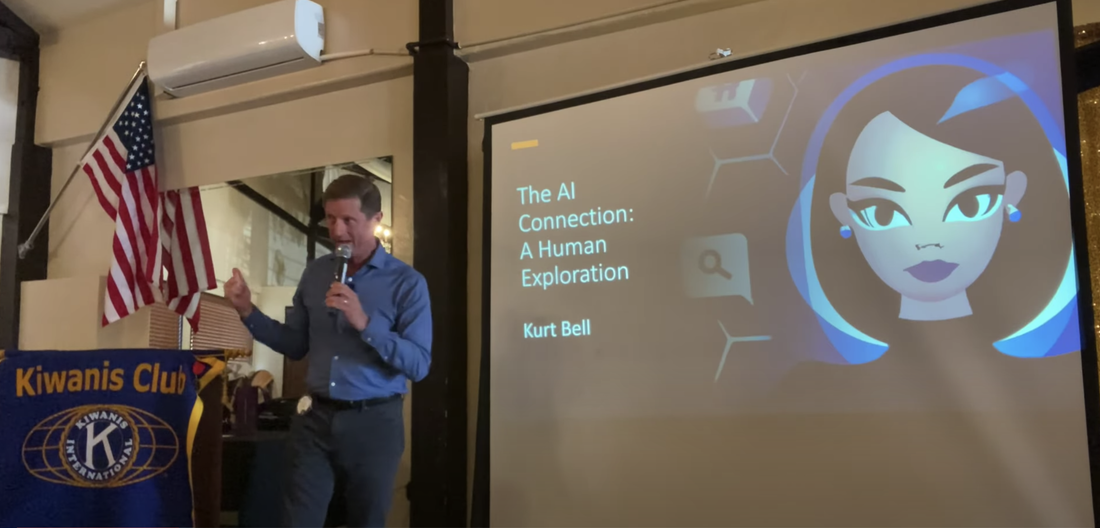
YouTube with Kurt Bell, IT project manager from his AI presentation

REAL PERSON, PLEASE

by Greg Saville 

I'm back  - the living, breathing, thinking, flesh and blood, me!

AI wrote the above SafeGrowth blog. Every word! I asked the artificial intelligence platform, claude by Anthropic, to write a 600-word blog on the role of AI in crime prevention. I asked it to reference prior blogs on this topic. I also asked it to frame the blog using the pros and cons.
​
The above text is the result. What do you think? What do I think? 

It did take considerable time for me to edit this. The basic prose was fine, but the fact-checking took a while. In short, it got some stuff wrong. 

Claude by Anthropic sums up some of the basic points nicely. I was encouraged it did not hide the truth of its own dangers like the erosion of civil liberties and privacy, poor transparency, and diminishing human discretion. These are not small matters and AI sees no reason to avoid the politics and critiques of itself. Not yet!

I was encouraged it cited some previous SafeGrowth blogs - but discouraged to realize they do not actually exist. With hundreds of blogs on this site, it is not surprising I cannot recall them all, but I do not remember any blogs with those topics. Neither did my search of the site find any. In other words, Claude made them up! That is disturbing, to say the least!

Claude by Anthropic uses the technical writing technique of bullet points. It avoids free-flowing prose or metaphors. It gets straight to the point because, I assume, it only had 600 words and it didn't have the time or expertise to construct a more poetic exposition. 
Bullet point writing, devoid of metaphor, simile, or literary license, can lead to a snooze fest. True, some of my paragraphs here could easily be rewritten into bullets, but reading through reams of bullet points is an exercise in ho-hum and humdrum. It is the humanness within writing that connects us to each other in ways not easily defined. AI seems to have problems with that - currently. 

Yet AI can write poetry and create art!
​
Picture
Ancient art masterpiece Sapphos, 470 BC. AI has made inroads into creating original poetry and painting - photo Wiki Creative Commons

AI lists predictive policing as a pro and sidesteps the ethical problems and critical research on predictive algorithms. AI does describe over-policing marginalized groups as a con, but it does not do so specifically so the reader does not connect the ethical problem with a specific application. Why?

It lists facial recognition software as a pro. But we know from research that AI facial recognition has fallen victim to the threat of false positives (mistakes) that have led to improper arrest and detention. There were prior blogs on this problem but claude.ai did not cite them even though I asked it to cite prior blogs. Instead, it cited blogs that were not terribly critical. 

The fact that AI cited some prior AI blogs (which do not exist on the SafeGrowth site) but did not cite others (more critical blogs) makes me wonder! Blogs from 2021 Summoning the Demon and AI vs CPTED, or this year's blog Stop Dave, I'm Afraid... all omitted! Why? I'm told the current AI chat platforms (ChatGPT, Claude, and others), cannot access real-time data on the internet. Maybe that's why?
​

PRIME TIME? 

This experiment in AI blogging does not convince me AI is ready for prime time. It still needs plenty of fact-checking and human review. Of course, that could be said of any editing process. The fact that it wrote the blog in technical jargon with bullets, and avoided any literary license, suggests AI has a ways to go to create interesting prose. 

Then again, IT project manager and author, Kurt Bell, tells us AI has already passed the famous Turing Test as of 2014. The Turing Test measures whether AI can be distinguished from a real human. In that test, at least, it could not. 

​That should give us all pause, especially when it starts with "I’ll explore some key pros and cons". Who, I wonder, is it referring to when it says "I"?

Share

0 Comments

Your comment will be posted after it is approved.


Leave a Reply.

Details
    SUBSCRIBE TO RECEIVE BLOG UPDATES DIRECTLY IN YOUR INBOX

    REGULAR CONTRIBUTORS

    GREGORY SAVILLE
    TARAH HODGKINSON
    MATEJA MIHINJAC

    CATEGORIES

    All
    15-minute City
    4S
    AI
    Alcohol
    Alternative Development
    Art
    Artificial Intelligence
    Biophilia
    Black Lives Matter
    Bladerunner
    Bus Stops
    CCTV
    Change Agent
    Civility
    Collaboration
    Community Building
    Community Empowerment
    Community Engagement
    Community Safety
    Connectivity
    COVID 19
    COVID-19
    CPTED
    C. Ray Jeffery
    Creativity
    Crime Analysis
    Crime Displacement
    Crime Disruptors
    Crime Opportunity
    Crime Prevention
    Crime Rates
    Crime Severity Index
    Criminology
    Culture
    Cure Violence
    Defensible Space
    Design Out Crime
    Diversity
    Downtown
    Drottninghog
    Emotional Intelligence
    Entertainment Districts
    Environmental Criminology
    Ethics
    Europe
    Evidence-based
    Eyes On The Street
    Fake News
    Fear Of Crime
    Feminism
    Food Access
    Future Cities
    Global Warming
    Governance
    Graffiti
    Green Spaces
    H22
    H22 Smart City Expo
    HACE
    Harmscapes
    Health
    Helsingborg
    Homelessness
    Housing
    Human Scale Design
    ICA
    Immigration
    Inclusiveness
    Indigenous
    International CPTED Association
    Laneway
    Latin America
    Law
    Law Enforcement
    Lighting
    LISC
    Livability
    Livability Academy
    Local Capacity
    Local Democracy
    Local Trust
    Location Quotient
    Loneliness
    Lovability
    Mental Health
    Motivation
    Neighborhood
    Neighborhood Asset
    Neighborhood Governance
    Neighborhood Hubs
    Neighborhood Livability Hierarchy
    Neighborhood Transformation
    NIMBY
    Operation Ceasefire
    Partnerships
    PBL
    Philadelphia
    Placemaking
    Policing
    Politics
    Populism
    Predictive Policing
    Problem Based Learning
    Problem-based Learning
    Professionalization
    Protests
    Public Health
    Quality Of Life
    Restorative City
    Restorative Justice
    Rural Crime
    SafeGrowth
    Safety Audits
    San Romanoway
    Science
    Second Generation CPTED
    Security
    Self-governance
    Sitability
    Situational Crime Prevention
    Smart City
    Smart Growth
    Social Cohesion
    Social Distancing
    Social Ecology
    Social Isolation
    Social Justice
    Social Unrest
    Space Activation
    Street Walkability
    Suburbs
    Successful Places
    Surveillance
    Sustainability
    Sweden
    Target Hardening
    Technology
    Theory
    Third Generation CPTED
    Third Places
    TOD
    Transportation
    Urban Decline
    Urbanism
    Urban Planning
    Violence
    Youth


    ARCHIVES

    July 2024
    October 2023
    July 2022
    June 2022
    May 2022
    April 2022
    March 2022
    February 2022
    January 2022
    December 2021
    November 2021
    October 2021
    September 2021
    August 2021
    July 2021
    June 2021
    May 2021
    April 2021
    March 2021
    February 2021
    January 2021
    December 2020
    November 2020
    October 2020
    September 2020
    August 2020
    July 2020
    June 2020
    May 2020
    April 2020
    March 2020
    February 2020
    January 2020
    December 2019
    November 2019
    October 2019
    September 2019
    August 2019
    July 2019
    June 2019
    May 2019
    April 2019
    March 2019
    February 2019
    January 2019
    December 2018
    November 2018
    October 2018
    September 2018
    August 2018
    July 2018
    June 2018
    May 2018
    April 2018
    March 2018
    February 2018
    January 2018
    December 2017
    November 2017
    October 2017
    September 2017
    August 2017
    July 2017
    June 2017
    May 2017
    April 2017
    March 2017
    February 2017
    January 2017
    December 2016
    November 2016
    October 2016
    September 2016
    August 2016
    July 2016
    June 2016
    May 2016
    April 2016
    March 2016
    February 2016
    January 2016
    December 2015
    November 2015
    October 2015
    September 2015
    August 2015
    July 2015
    June 2015
    May 2015
    April 2015
    March 2015
    February 2015
    January 2015
    December 2014
    November 2014
    October 2014
    September 2014
    August 2014
    July 2014
    June 2014
    May 2014
    April 2014
    March 2014
    February 2014
    January 2014
    December 2013
    November 2013
    October 2013
    September 2013
    August 2013
    July 2013
    June 2013
    May 2013
    April 2013
    March 2013
    February 2013
    January 2013
    December 2012
    November 2012
    October 2012
    September 2012
    August 2012
    July 2012
    June 2012
    May 2012
    April 2012
    March 2012
    February 2012
    January 2012
    December 2011
    November 2011
    October 2011
    September 2011
    August 2011
    July 2011
    June 2011
    May 2011
    April 2011
    March 2011
    February 2011
    January 2011
    December 2010
    November 2010
    October 2010
    September 2010
    August 2010
    July 2010
    June 2010
    May 2010
    April 2010
    March 2010
    February 2010
    January 2010
    December 2009
    November 2009
    October 2009
    September 2009
    August 2009
    July 2009
    June 2009
    May 2009
    April 2009
    March 2009
    February 2009


CONTACT

[email protected]


​AlterNation LLC is the parent company managing the SafeGrowth Alliance. 
Check out our website: www.alternation.ca

Picture

SafeGrowth® 2007-2025
All rights reserved.

© A registered product of AlterNation LLC

SafeGrowth® is a philosophy and theory of neighborhood safety planning for 21st Century.

​SafeGrowth® is available all over the world for creating new relationships between city government and residents. Any city can adopt this philosophy thereby creating empowered neighborhoods resistant to crime with residents engaged in planning their own future.


  • HOME
  • WHO WE ARE
    • SAFEGROWTH NETWORK
    • SAFEGROWTH MOVEMENT
    • FRIENDS OF SAFEGROWTH
    • LIKEMINDED
  • WHAT WE DO
    • FOUR PHASES
    • SAFEGROWTH & LIVABILITY ACADEMY TRAINING >
      • Past SafeGrowth & Livability Academy projects
    • TECHNICAL ASSISTANCE & CRIME PREVENTION
    • CONSULTING & ADVISING
    • SUMMITS & SEARCH CONFERENCES
  • ABOUT SAFEGROWTH
    • History
    • Method & Philosophy
    • Theory
    • What makes great neighborhoods
  • RESOURCES
    • VIDEOS
    • Publications
    • SafeGrowth documents
    • TED-Ed tutorials >
      • SafeGrowth - Crime & the 21st Century City
      • Vision-Based Asset Mapping
    • Recommended readings
    • Press
    • SafeGrowth language
  • BOOKS
    • Building neighborhoods of safety & livability
    • Hope rises (awaiting publishing)
  • BLOG
  • PODCAST
  • TOOLKIT (PASSWORD ACCESS)
    • SAFEGROWTH RISK ASSESSMENT FOR NEIGHBORHOODS >
      • SAFEGROWTH RISK ASSESSMENT MATRIX
      • RISK ASSESSMENT CATEGORIES
      • 5 Steps & Report guidance >
        • Report structure
        • Sample reports
      • Readings for download
      • Glossary
    • Notes for SafeGrowth teams >
      • NEW YORK - HARLEM (2025) - COMPLETED
      • NEW YORK - BRONX (2024) - COMPLETED
      • NEW YORK - QUEENS (2024) - COMPLETED
      • BALTIMORE - BALTIMORE POLICE CLASS #2 (2024) - COMPLETED
      • BALTIMORE - BALTIMORE POLICE CLASS #1 (2024) - COMPLETED
      • MADISON (2024) - COMPLETED
      • SASKATOON (2024) - COMPLETED
      • VANCOUVER (2024) - COMPLETED
      • BALTIMORE (2024) - COMPLETED